

The Altaviva™ system: Advanced treatment for urgent bladder leaks
Struggling with the kind of of bladder leaks that happen on the way to the bathroom? Discover a different way to manage urge urinary incontinence (UUI) — and imagine focusing less on leaks and more on what matters to you.
Appendix B: Clinical Study Summary. M028929C001 RevC - Clinician Therapy and Programming Guide Altaviva™ Model P7850N
More possibilities for treating urge-related bladder leaks
What is urge urinary incontinence?
UUI is a type of bladder control problem that can cause a sudden, intense urge to urinate that is difficult to control.1 This may lead to involuntary leakage and frequent, disruptive trips to the bathroom.
What causes UUI?
Bladder and brain communication is essential for bladder control. Communication breakdowns may cause bladder control problems such as urge urinary incontinence.2,3
What are UUI treatment options?
Many people start with lifestyle changes or medications, but these don’t work for everyone and may not provide long-lasting relief. If you are looking for an advanced therapy, talk to your doctor about the Altaviva™ implant.

Fran
Altaviva™ implant patient
How does the Altaviva™ implant work?
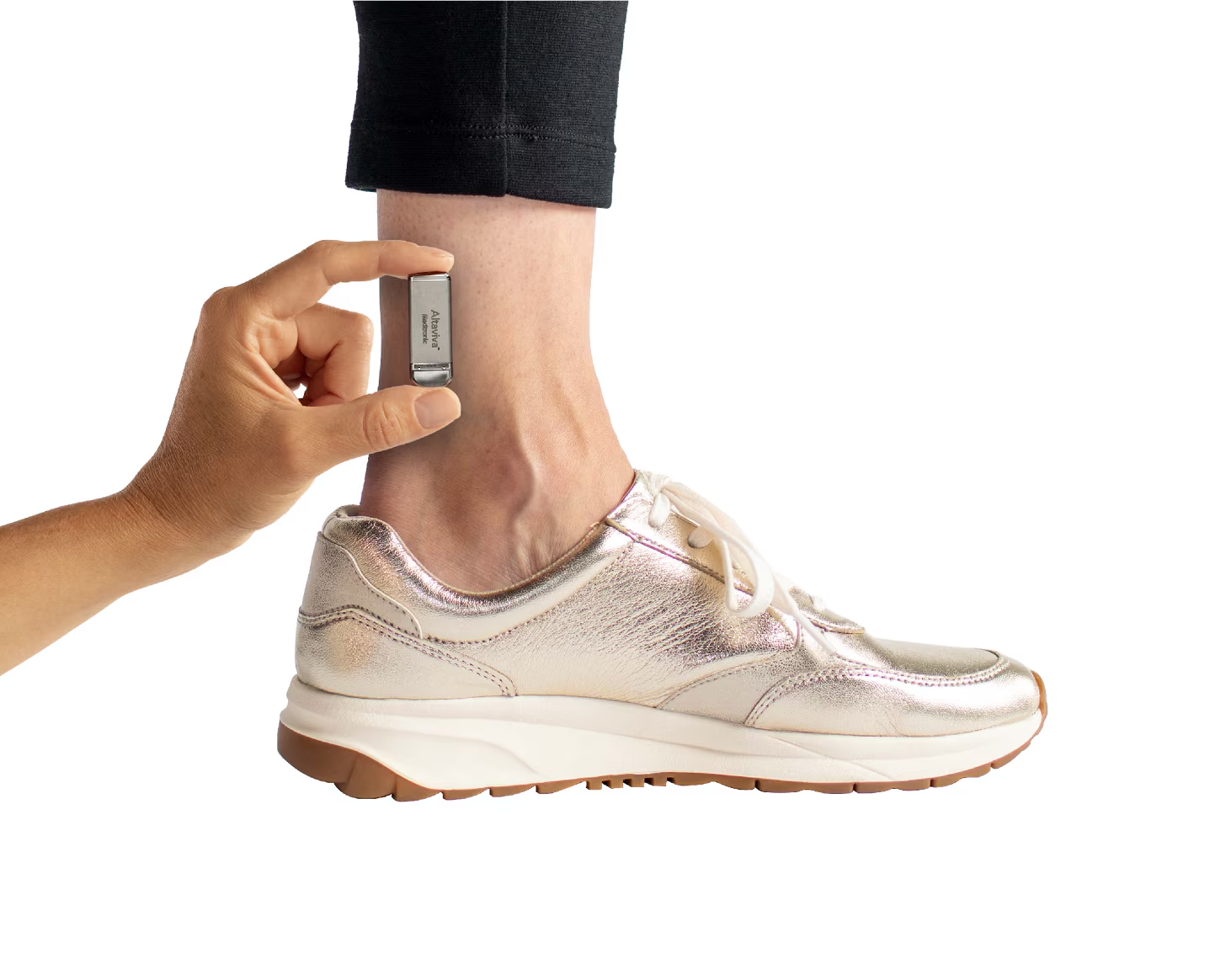
The Altaviva™ implant is a small device placed near the ankle that stimulates the tibial nerve — which may help restore communication between the brain and bladder.2,3 For people ready to move beyond medications, the Altaviva™ system may be an option.
Unlike medications, the Altaviva™ system targets the tibial nerve — not just symptoms. It’s designed with a long-term battery expected to deliver 15 years of therapy,†,4 with infrequent recharging.
Learn more about the Altaviva™ system, an advanced treatment for urge urinary incontinence.
†Based on clinical and bench testing for expected therapy settings.
In addition to risks related to surgery, complications can include pain at the implant site, lower leg pain, infection, wound complications, nerve injury, movement of the implant, undesirable change in bowel or bladder function, uncomfortable or unintended stimulation sensations, loss of therapeutic effect, discomfort when recharging, or technical or device problems. Please see Important Safety Information for more details. Talk with your doctor about ways to minimize these risks.
“I can enjoy the moment without worry.”
Anthony and Roschelle's stories may provide hope for many who are battling similar challenges. While their results are uniquely theirs, they inspire a message of hope and potential for others.
Individual results may vary. Talk to your doctor to see if the Altaviva™ system is right for you.
Take the first step
Improved quality of life5 could be a single procedure away with the Altaviva™ therapy

No sedation required

Technology for every day

Clinical outcomes
‡ Based on clinical and bench testing for expected therapy settings.
§ Adverse events related to the device, procedure, and/or therapy occurred in 20% of implanted subjects through 12-month follow-up. The most common types of related AEs were implant-related infections at the implant site (7%) and implant site pain (3%).
FAQ
Talk to your doctor and your insurance provider to learn more about your coverage.
You can have a full-body MRI scan if certain conditions are met.8 Your clinician can provide more details about these conditions, as well as safety information.
The implant has a long-lasting battery4 expected to deliver 15 years of therapy.‡
‡ Based on clinical and bench testing for expected therapy settings.
The device only needs to be charged 1–2 times per year under standard therapy settings and charging only takes about 30 minutes with proper placement and default recharge speed.9
In addition to risks related to surgery, complications can include pain at the implant site, lower leg pain, infection, technical or device problems, movement of the implant, undesirable change in bowel or bladder function, or uncomfortable or unintended stimulation sensations. Please see Important Safety Information for more details. Talk with your doctor about ways to minimize these risks.
Altaviva™ implant works by sending electrical pulses to the tibial nerve, which is linked to the nerves that control your bladder. These pulses may help restore the communication pathway between your brain and bladder,2,3 which may help reduce urgency with leaks.5
Urge urinary incontinence is a chronic condition. Altaviva™ therapy can help manage the symptoms but does not cure the condition.
The procedure is minimally invasive,6 requiring a 2 cm incision.
The Altaviva™ implant for UUI involves placing a small device under the skin near your ankle, which sends electrical pulses to the tibial nerve that helps maintain normal bladder function.2,3 These pulses may help restore the communication pathway between your brain and bladder which may help urgency with leaks.5 This treatment is called tibial neuromodulation is a proven therapy for reducing bladder control symptoms.5, 10-14
Bladder control issues often stem from miscommunication between the brain and the nerves controlling bladder function.15,16 By targeting the tibial nerve, the therapy may help restore normal bladder function.2,3
2. Li X, Li X, Liao L. Mechanism of action of tibial nerve stimulation in the treatment of lower urinary tract dysfunction. Neuromod. 2023;27:256-266.
3. Bhide AA, Tailor V, Fernando R, Vik K, Digesu GA. Posterior tibial nerve stimulation for overactive bladder - techniques and efficacy. Int Urogynecol J. 2020;31:865-70.
4. M028929C001 RevC - Clinician Therapy and Programming Guide Altaviva™ Model P7850N.
5. Appendix B: Clinical Study Summary. M028929C001 RevC - Clinician Therapy and Programming Guide Altaviva™ Model P7850N.
6. Cameron AP, Chung DE, Dielubanza EJ et al. The AUA/SUFU guideline on the diagnosis and treatment of idiopathic overactive bladder (2024). J Urol. 2024;212:11-20.
7. M028930C001 RevC - Altaviva™ Model P7850N Neurostimulator Implant Manual.
8. M028949C001 RevC - MRI Guidelines for Altaviva™ Neurostimulator.
9. Medtronic data on file: T-Entry System – Recharge Performance Design Verification Test Report.
10. Peters KM, Carrico DJ, et al. Randomized trial of percutaneous tibial nerve stimulation versus sham efficacy in the treatment of overactive bladder syndrome: results from the SUmiT trial. J Urol. 2010;183:1438-1443.
11. Peters KM, MacDiarmid SA, Wooldridge LS, et al. Randomized trial of percutaneous tibial nerve stimulation versus extended-release tolterodine: results from the overactive bladder innovative therapy trial. J Urol. 2009;182(3):1055-1061.
12. Kobashi K, Nitti V, Margolis E, et al. A prospective study to evaluate efficacy using the NURO percutaneous tibial neuromodulation system in drug-naïve patients with overactive bladder syndrome. J Urol. 2019;131:77-82.
13. Rogers A, Bragg S, Ferrante K, et al. Pivotal study of leadless tibial nerve stimulation with eCoin for urgency urinary incontinence: an open-label, single arm trial. J Urol. 2021;206:399-408.
14. Heesakkers JPFA, Toozs-Hobson P, Sutherland SE, et al. A prospective study to assess the effectiveness and safety of the BlueWind system in the treatment of patients diagnosed with urgency urinary incontinence. Neurourol Urodyn. 2024;43:1491-1503.
15. Chancellor MB, Chartier-Kastler EJ. Principles of sacral nerve stimulation (SNS) for the treatment of bladder and urethral sphincter dysfunctions. Neuromod. 2000;3(1):15-26.
16. Leng WW, Chancellor MB. How sacral nerve stimulation neuromodulation works. Urol Clin North Am. 2005;32:11-18.